Texhibition confirms international sourcing importance
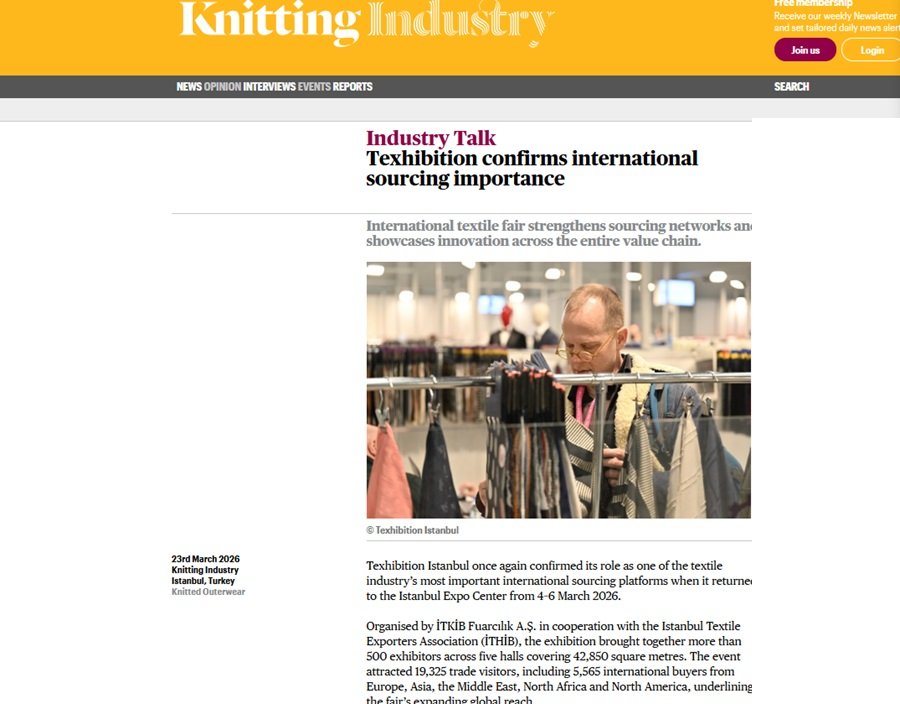
Texhibition Istanbul once again confirmed its role as one of the textile industry’s most important international sourcing platforms when it returned to the Istanbul Expo Center from 4–6 March 2026.
Organised by İTKİB Fuarcılık A.Ş. in cooperation with the Istanbul Textile Exporters Association (İTHİB), the exhibition brought together more than 500 exhibitors across five halls covering 42,850 square metres. The event attracted 19,325 trade visitors, including 5,565 international buyers from Europe, Asia, the Middle East, North Africa and North America, underlining the fair’s expanding global reach.
The exhibition showcased the entire textile value chain, including knitted and woven fabrics, yarns, accessories, printing, embroidery and denim. Knitted and woven fabrics represented the largest segment with 336 exhibitors, followed by accessories with 50 companies, printing with 47, embroidery with 18, denim with 22 and yarns with 12 exhibitors.
At a time of global uncertainty and geopolitical tension, the event once again positioned Istanbul as a meeting point for the international textile industry. Buyers, designers and manufacturers used the fair not only to initiate business discussions but also to exchange ideas on resilient supply chains and new sourcing strategies.
The event highlighted the strength of the Turkish textile sector, which combines quality manufacturing with rapid production and integrated infrastructure. The country’s textile ecosystem covers the entire value chain, from cotton, wool and synthetic fibres through yarns, fabrics and denim to printing, embroidery and accessories.
“Texhibition Istanbul demonstrates year after year how strong and flexible the Turkish textile industry is,” said Fatih Bilici, vice president of İTHİB and chairman of the Texhibition Fair Committee. “Especially in times of global uncertainty, international brands are looking for reliable partners with fast supply chains and high quality – and this is where Turkey offers significant advantages.”
Turkey remains one of the world’s leading textile producers with an annual production value of approximately US$78 billion, including around US$45 billion in textiles and US$33 billion in apparel. The industry’s fully integrated structure allows companies to operate with short development cycles, flexible production volumes and rapid delivery to international markets.
Proximity to Europe is another competitive advantage, with land transport enabling fast response times for brands increasingly dependent on agile supply chains.
Sustainability and innovation were also prominent themes throughout the fair. Many exhibitors presented developments aimed at reducing water and energy consumption as well as new recycling and circular material solutions.
The exhibition halls reflected the international diversity of the textile market, with visitors from Europe, the Middle East, North Africa, Asia and North America exploring new supplier relationships and sourcing opportunities. Exhibitors reported strong business discussions and highlighted the professional atmosphere of the event.
Muammer Özpehlivan of EMR Zipper said the fair offered an environment where the entire industry could meet important buyers and purchasing teams from major retail chains. Murat Canpolat of Migiboy Textile added that Texhibition has evolved into a truly international platform where companies can establish long-term business connections.
The Blue Black Denim area was again one of the event’s main attractions, highlighting Turkey’s position as a global denim hub. Leading manufacturers including Atlas Denim, Bossa, ISKO, İSKUR and Kipaş presented sustainable technologies and creative developments, including innovative dyeing techniques, new surface structures and environmentally responsible washing processes.
Interactive installations, workshops and expert talks demonstrated how denim continues to evolve as both a technical textile and a creative design platform.
International participation remained strong, with visitors from more than 95 countries attending the event. Key buyer markets included Italy, Germany, Spain, the United States and the Netherlands, alongside delegations from countries such as Greece, the United Kingdom, Saudi Arabia, Kazakhstan, Tunisia and the United Arab Emirates.
Major global brands and buyers attending the exhibition included Hugo Boss and Puma from Germany, Stone Island from Italy, Nike, Coach, Michael Kors and Burton from the United States, Promod from France, The Sting from the Netherlands and Polopique from Portugal.
The fair’s B2B meetings proved particularly dynamic, enabling international buyers to meet Turkish manufacturers directly and explore new sourcing partnerships. Participants highlighted Turkey’s flexible production capacity and rapid delivery capabilities as key advantages in global supply chains.
Alongside the exhibition, Texhibition Istanbul hosted a comprehensive seminar and trend programme addressing topics such as sustainable materials, digital supply chains, artificial intelligence in textile production and emerging consumer trends.
One of the highlights was the Innovation Hub, curated by Arzu Kaprol and Filiz Tunca, which presented forward-looking material developments that combine sustainability, technology and design. Innovations included Colourself Cotton, a self-dyeing cotton designed to reduce water and energy use, and Biodegradable Pleats, a fully compostable pleated textile.
Other developments included Wavy Plush textiles with distinctive surface structures, environmentally friendly Vegan Bioglitter and advanced yarn technologies such as Umorfil. Natural fibre innovations were also presented, including hemp-based forestry protection textiles and durable nettle fibre fabrics requiring minimal water during production.
The fair also introduced the ReValue Stock Hub, which attracted strong interest from buyers and designers by transforming surplus fabrics into valuable sourcing opportunities. The concept demonstrated how circular thinking and efficient material use can create new commercial potential.
Trend areas provided curated insights into future fabric and design directions, with a new accessories-focused presentation highlighting the growing importance of trims and complementary components within the textile supply chain.
Throughout the three-day event, seminars and presentations addressed key developments shaping the industry, including trend forecasting, digital transformation and new business models. WGSN hosted several sessions exploring future fabric and fashion trends, while other talks focused on artificial intelligence, digital product passports and advanced recycling technologies.
The Blue Black Denim area also hosted its own programme of workshops and discussions on denim culture, sustainable washing technologies and the development of independent denim brands.
The March edition of Texhibition Istanbul highlighted the textile industry’s ongoing transformation as supply chains shift and sustainability requirements intensify. Despite these changes, the integrated structure, innovation capacity and logistical advantages of the Turkish textile industry position it strongly within the global market.
“Our goal was to create an international brand where global trends are shaped and the perception of quality in Turkish textiles is strengthened,” said Ahmet Öksüz, president of İTHİB. “Texhibition has evolved beyond a trade platform and has become an important showcase reflecting the vision and ambitions of our industry.”
The next edition of Texhibition Istanbul will take place from 9–11 September 2026.